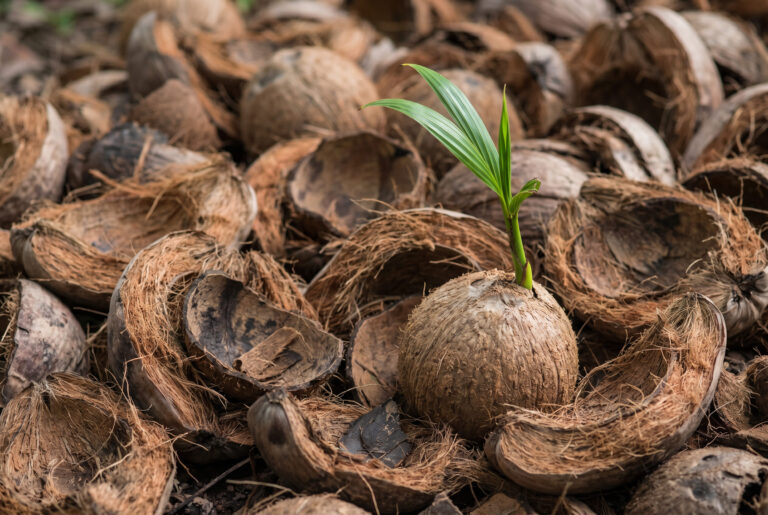

Coco coir, also knows as Coco peat is a natural waste product of the coconut industry and stands out as one of the most versatile organic growing mediums available. As an environmentally friendly alternative to peat moss, it offers natural disease resistance and exceptional water retention while promoting excellent aeration for plant roots. Coco coir products provide a reliable, efficient, and green solution for various horticultural needs.
Despite peat moss being the traditional choice, this is beginning to change due to a lack of sustainable production methods.
Peat moss is a plant-growing medium that takes hundreds of years to replenish, harvesting it
for this use is simply not suitable.
Coco coir, as a natural waste product, causes minimal impact on the environment and has proven itself to be the most environmentally friendly alternative to peat moss.
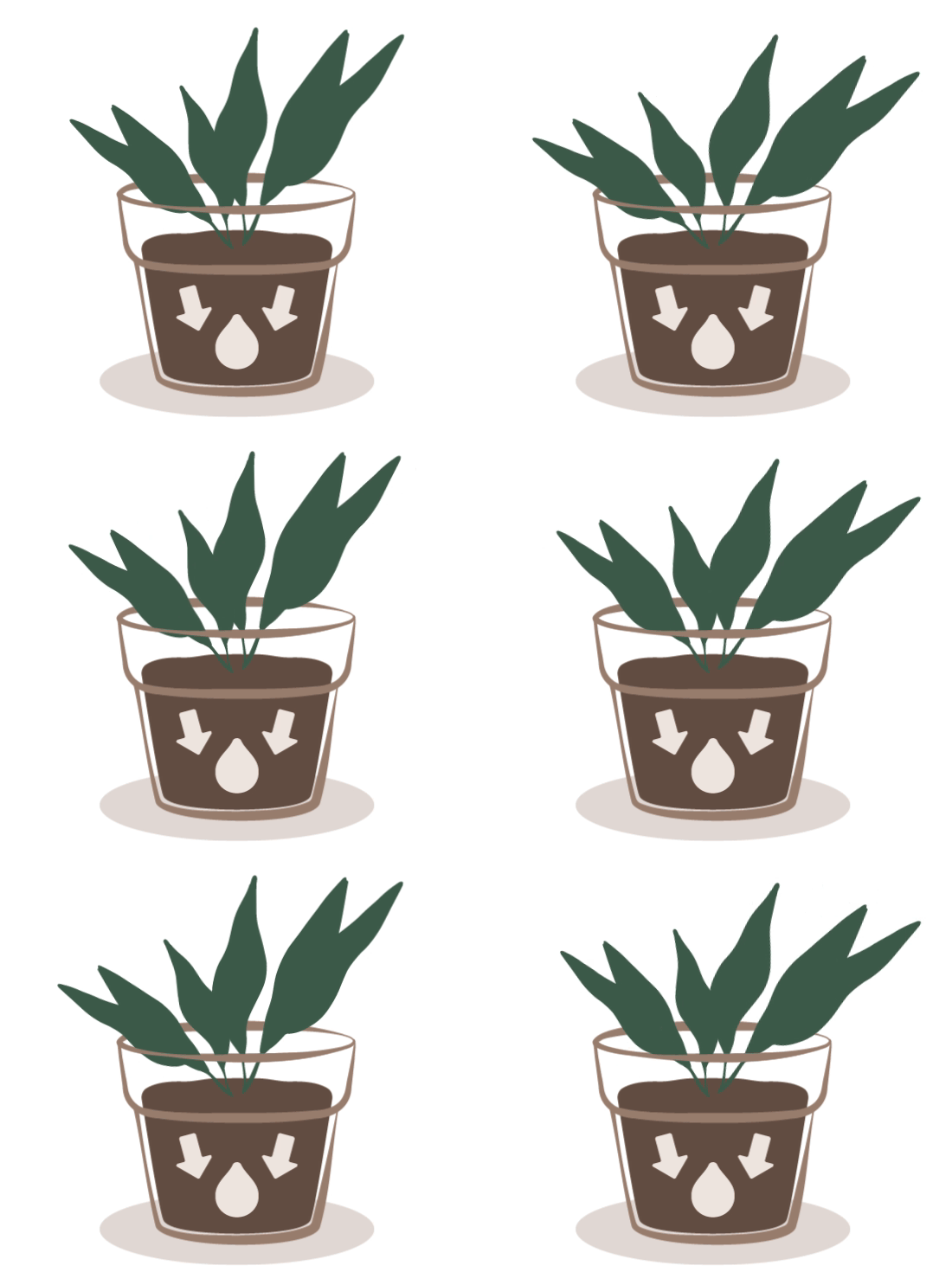
Coco coir can hold a large amount of water without becoming waterlogged, keeping plant roots consistently moist.
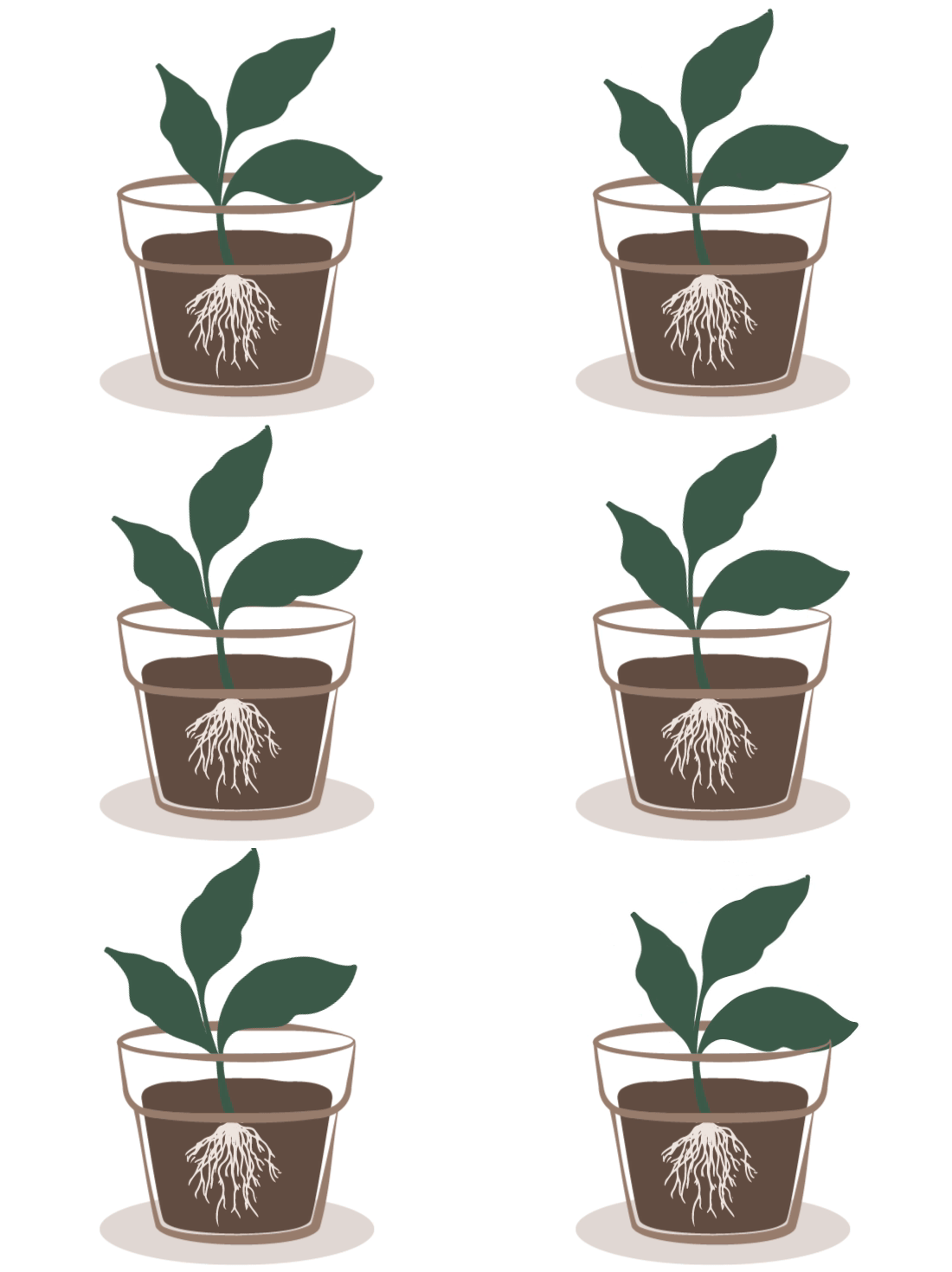
Coco coir promotes healthy root growth by optimizing nutrient absorption and preventing root rot.
The structure of coco coir allows for excellent air circulation, which is crucial for healthy root development.
Coco coir generally has a neutral pH, making it suitable for a wide range of plants.
Efficiently retains and releases nutrients, ensuring healthier plant growth.
Resistant to various pests, fungi, and diseases, reducing the risk of plant illnesses.
Coconut substrate is a sustainable growing medium made from coconut fibers, a byproduct of the coconut industry. It is used as an alternative to peat moss and offers excellent water absorption, aeration, and nutrient retention for plants.
Coconut substrate is widely used in horticulture, hydroponics, and houseplant care. It is suitable for growing flowers, vegetables, herbs, and even as a ground cover.
Unlike peat moss, which takes centuries to recover, coconut substrate is a byproduct of coconuts and is harvested in an environmentally friendly way without harming natural ecosystems.
Dry coconut substrate must be hydrated before use. Add water until the substrate expands and takes on an airy, moist structure. It is then immediately ready for use in pots or garden beds.
On average, 1 kg of dry coconut substrate absorbs approximately 5 to 7 liters of water. Allow the water to soak in well until the substrate is fully hydrated and ready for use.
Coconut substrate: - Retains moisture but prevents root rot - Ensures good aeration of the roots - Has a neutral pH value - Is naturally resistant to fungi and pests - Is reusable and environmentally friendly
Yes! Coconut substrate can be reused multiple times. After use, rinse the substrate thoroughly to remove excess salts and old root residue, let it dry, and rehydrate it for reuse.
Coconut substrate itself contains few nutrients and acts as a neutral base. It is recommended to add organic or liquid fertilizers for optimal plant growth.
Yes, the neutral pH and good water management make it suitable for most plants, from houseplants to vegetable crops.
Absolutely. Coconut substrate is a by-product that is processed sustainably and offers a good alternative to peat moss, the extraction of which is harmful to the environment.
Sign up for exclusive offers, the latest product launches, early access to giveaways, and handy gardening tips & tricks!